
Remember when Jesus raised Lazarus from the dead? After four days in the tomb, Lazarus walks out alive. And the first thing Jesus tells the people around him is this: take off the grave clothes. It’s an identity statement. You were dead, but now you’re alive. You don’t have to wear those anymore, because that’s not who you are.
Now imagine Lazarus walking around town, still wrapped up, telling everyone, “Oh, don’t talk to me. I’m just dead.” It’s ridiculous. And yet many of us live that way, still wearing what belonged to the old life as if we have no say in the matter.
That raises the question at the heart of 1 Peter 2: What do you do when Jesus gets a hold of your life, but the world around you hasn’t caught up yet?
An Identity Received, Not Achieved
Peter has just told the scattered, persecuted church who they are: “a chosen people, a royal priesthood, a holy nation, God’s special possession, that you may declare the praises of him who called you out of darkness into his wonderful light” (1 Peter 2:9). That’s a purpose statement. When you remember who you are, you remember why you are.
We can build an identity on what we achieve, which is fragile. We can accept one imposed by the world, measured by a bank account, a pants size, or a relationship status. Or we can receive one from God. You will never discover who you really are by looking to the world or your own achievements. You will only discover that in Christ.
Our pastor shared that he was the first follower of Jesus in his family, in a family line marked by addiction, divorce, abuse, and generational patterns of sin. Jesus interrupted a story that was destined to repeat the cycle. But as he read this passage, he realized that somewhere, someone kept the faith. Someone stood firm under persecution and the threat of death, and their faithfulness carried all the way down to the moment his family’s story could be rewritten.
You Have More Agency Than You Think
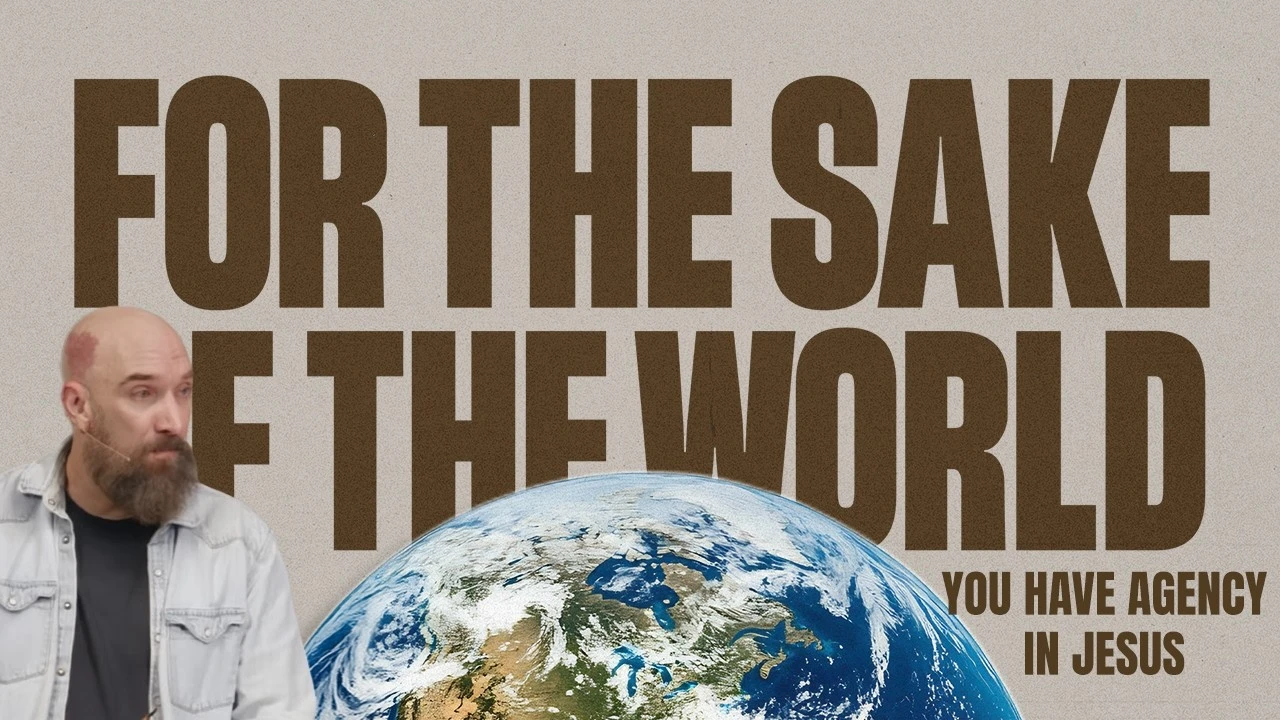
Peter was writing into a world of power, status, and hierarchy, where Christians were persecuted because the gospel turned that structure upside down. What strikes us is that Peter doesn’t teach powerless people how to become powerful. He teaches them how to live as free people in the power of Christ while living in a world controlled by darkness. In the world, not of the world, but for the sake of the world.
There’s a biblical principle at work here that often goes underdeveloped in modern Christianity: agency. God created you with the capacity to imagine, to choose, to cultivate, to build, to love, to say yes and to say no. From the very beginning, He invited humanity to work the garden, cultivate it, multiply, and expand its boundaries. God doesn’t make passive consumers of His creation.
And one of the enemy’s most powerful schemes is to rob you of that agency. He wants you to surrender your purpose and your God-given identity to someone or something else. When we do, Scripture says we become slaves: to substances, to fear, to comfort, to approval, to control, to unforgiveness. It’s the same lie from the garden: “Did God really say?” The enemy wants you to believe that the only real choice you have is to live like the world.
But if you’re in Christ, you belong to Jesus. You’re not owned by the world. You’re not defined by your circumstances, enslaved to your past, or controlled by your emotions.
Not Your Fault, Still Your Responsibility
There’s a difference between acknowledging what happened to you and surrendering your identity to it. You can name the pain, the wounds, and the brokenness you’ve experienced. Satan’s lie is that because it happened, you have no agency left. That’s a lie.
In our pastor’s household, they say it this way: something may not be your fault, but that doesn’t mean it’s not your responsibility. Responsibility doesn’t mean blame. It means asking, “What do I do with what has been entrusted to me, with what’s right in front of me?”
Scripture is full of people who answered that question well. Joseph did some of his best work in prison after being wrongly accused. David was formed in obscurity, fighting lions and bears when no one was watching. Daniel held to his worship of God over the threat of death. Even Moses, after his worst moment, spent his exile learning to navigate the wilderness, and God later sent him to lead His people through that same wilderness. You can’t lead someone where you haven’t gone yourself.
Don’t Join Them
“Dear friends, I urge you, as foreigners and exiles, to abstain from sinful desires, which wage war against your soul. Live such good lives among the pagans that, though they accuse you of doing wrong, they may see your good deeds and glorify God on the day he visits us.” (1 Peter 2:11–12)
Peter isn’t laying down a rule here. He’s calling out the agency that God has already given you through Christ in the power of the Holy Spirit. And he reminds his readers that they’re foreigners and exiles: don’t get too cozy with the world.
When life gets hard, there’s a temptation to give in to the demands of culture. We even have a saying for it: if you can’t beat them, join them. Peter says you might not be able to beat them, but you don’t join them. You’re set apart, a holy nation in a foreign land. This has nothing to do with earning God’s acceptance. It’s about knowing that there’s an enemy waging war against your soul, and you’ve been given what you need to stand and fight.
Faithful With What’s in Front of You
You can only be faithful today, right now, with what’s in front of you. You can’t fix the world, your marriage, or your boss today. But God has put something in front of you to be faithful to today.
Peter then brings this theology of agency into three places where faithfulness gets complicated: government, work, and marriage.
“For it is God’s will that by doing good you should silence the ignorant talk of foolish people. Live as free people, but do not use your freedom as a cover-up for evil; live as God’s slaves. Show proper respect to everyone, love the family of believers, fear God, honor the emperor.” (1 Peter 2:15–17)
Remember, the emperor at the time was Nero. Peter isn’t saying don’t hold convictions or don’t care about what happens in your community. He’s saying don’t become like the thing you oppose. It doesn’t say your rant online will silence foolish talk. Doing good will. We can disagree without dehumanizing. We can resist injustice without becoming unjust. We can speak truth without becoming people of contempt.
Entrusting Yourself to the One Who Judges Justly
To those serving under harsh masters, Peter points to Jesus:
“When they hurled their insults at him, he did not retaliate; when he suffered, he made no threats. Instead, he entrusted himself to him who judges justly.” (1 Peter 2:23)
You have a choice. You can entrust yourself to yourself, to the world, or to God. Jesus wasn’t passive or powerless. He was free. People tried to shame Him, provoke Him, and control Him, and He refused to let anyone else decide who He was. Peter isn’t teaching people to accept oppression. He’s teaching them how to remain free when they can’t control their circumstances.
Our pastor shared about hundreds of believers being held captive in Nigeria who have been told they’ll be released if they deny Christ. Not one of them has walked free. That’s agency: no one gets to tell them who their God is or who they belong to.
And look at how Jesus works throughout the Gospels. To the man with the withered hand: “Stretch out your hand.” To the man who couldn’t walk: “Pick up your mat.” To the disciples facing a hungry crowd of thousands: “You feed them.” Healing, freedom, hope, and endurance are all possible. Not by your own power, but by Christ in you, the hope of glory.
Your Next Step
Maybe you’ve surrendered your agency to your circumstances, an addiction, a broken relationship, or a past wound that has turned into bitterness and unforgiveness. Jesus is saying, “Stretch out your hand. Come to me.” Repentance is God-given agency in your life. You can choose freedom. You can choose life. And if you don’t yet have a relationship with Jesus, you can choose today to receive His salvation, His forgiveness, and His strength. This week, sit with these questions:
- What have I surrendered my agency to, and what would it look like to take that back in Christ?
- Is there something in my life that may not be my fault, but is still my responsibility?
- Where am I tempted to “join them” because I don’t think I can beat them?
- What is God putting right in front of me to be faithful to today?
- When I’m insulted or provoked, am I entrusting myself to myself, the world, or the One who judges justly?
Join the Journey This Sunday
You don’t have to wear the grave clothes anymore. In Christ, you’re free to live as who God says you are.
Experience Mosaic in person this Sunday at 10:00 AM. Come as you are, grab a coffee at the café, and discover the freedom of belonging to Jesus. We would love to meet you there.
